
Planning a new floor and wondering what timber flooring cost really looks like? You are not alone. Prices swing widely between a budget hybrid plank and a premium solid hardwood, and your final quote depends on far more than the boards themselves. This 2026 guide breaks down timber flooring cost per m2 in Australia, covering hardwood, engineered timber, hybrid and laminate, so you can budget with confidence. As a rule of thumb, flooring cost in Australia runs from about $50 per m² for entry-level options up to $280 per m² for solid hardwood, supplied and installed.
Below, we compare each floor type, explain what drives your price and share realistic examples. At KK Timbermax, we supply and install timber, engineered and hybrid floors across NSW, so this guide is written with Sydney homeowners in mind.
Timber Flooring Cost at a Glance
| Flooring type | Typical cost per m² (supplied and installed) | Best suited to |
|---|---|---|
| Engineered timber | $110–$200 (around $140 typical) | A real timber look with better stability |
| Solid hardwood | $150–$280 (around $200 typical) | A long-term investment that can be re-sanded |
| Hybrid flooring | $55–$120 (around $80 typical) | Busy, water-prone areas |
| Laminate | $50–$100 (around $65 typical) | Budget-friendly dry areas |
These are indicative national averages for 2026. Your quote will vary with species, board width, subfloor condition and location, and Sydney tends to sit towards the upper end of each range.
Timber Flooring Price Per m2 by Floor Type
Hardwood Flooring Cost
Hardwood flooring cost depends heavily on species and grade. Blackbutt, which is widely available across Australia, is one of the most affordable choices at roughly $60 to $90 per m2 for materials. Jarrah sits near $70 and Ironbark near $90, while premium grades with fewer defects can reach $90 to $150 per m2. Parquetry can cost up to $150 per m2 for the boards alone.
Once labour and finishing are included, the supplied-and-installed price for solid hardwood typically lands between $150 and $280 per m2. The upside is longevity: solid timber can be sanded and refinished many times, which makes it a strong fit for homes with a suspended timber subfloor. If you are still weighing solid against engineered, our guide on engineered timber vs solid timber flooring covers the key differences.
Engineered Timber Flooring Prices
Engineered timber has a genuine hardwood layer bonded to a stable multi-layer core. It delivers the look and feel of solid timber for less money, which is why the cost of engineered timber flooring is usually lower than solid hardwood.
Most supplied-and-installed quotes for engineered wood flooring cost between $110 and $200 per m2, with about $140 per m2 a common mid-point. In Sydney, engineered timber flooring prices often run from around $140 to $230 or more per m2. As a guide, a 25 m² room fitted with a floating engineered floor typically costs about $3,875 to $6,250. Well-installed engineered floors can last 20 to 30 years.
The range is wide because the product range is wide. Explore our engineered timber flooring collection for classic boards, our Engineered Chevron Flooring for a statement pattern, or our premium engineered timber flooring for wider planks and refined finishes.
Timber Floorboards Cost: Materials and Labour
When you compare timber floorboards cost, separate the board price from the installation price. Labour for floating floorboards typically adds $30 to $50 per m2, while glue-down and nail-down methods usually cost more because they demand more preparation and time on site. A quote that bundles everything into one number is harder to compare, so ask for supply, installation, underlay and trims to be itemised.
Hybrid and Laminate: Lower Flooring Cost Alternatives
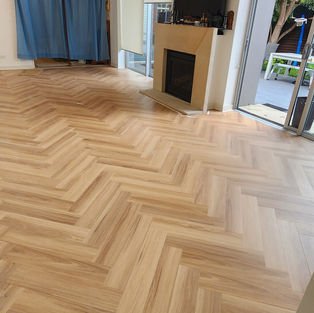
If the wooden flooring cost of solid or engineered boards stretches your budget, two alternatives are worth a look. Hybrid flooring typically costs $55 to $120 per m2 installed and is a popular pick for kitchens and family spaces thanks to its water resistance. Our premium herringbone hybrid flooring brings a high-end pattern at a more accessible price. Laminate flooring is the value pick at roughly $50 to $100 per m2, and our waterproof laminate flooring extends that value to moisture-prone rooms.
What Affects Timber Floor Cost Per Sqm?
Two homes can receive very different quotes for the same floor area. These are the main factors behind timber floor cost per sqm:
- Species and grade: Rarer, cleaner timber costs more than boards with natural knots and character marks.
- Board width and pattern: Wide planks and patterns such as herringbone and chevron take more material and skill to lay.
- Construction type: Solid, engineered, hybrid and laminate each sit in a different price bracket.
- Installation method: Floating, glue-down and nail-down methods carry different labour costs.
- Subfloor condition: An uneven subfloor needs levelling before any floor can go down.
- Room size and layout: Larger, simpler rooms usually cost less per m2 than small or multi-level spaces.
- Location: Labour and demand push prices higher in Sydney than in many other markets.
Extra Costs to Include in Your Flooring Budget
The price per m2 rarely tells the whole story. Add these items when you plan your flooring cost:
| Item | Typical cost |
|---|---|
| Old floor removal and disposal | $8–$25 per m² |
| Subfloor levelling or preparation | $20–$90 per m² |
| Timber floor sanding and polishing | $30–$70 per m² (around $45 typical) |
| Skirting boards, supplied and installed | $10–$30 per metre |
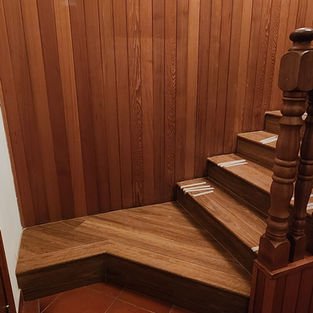
| Stairs | $30–$80 per step |
Timber Flooring Cost in Sydney and Across NSW
Labour rates and demand mean Sydney pricing is generally above the national average. Industry guides put engineered timber in Sydney at around $140 to $230 or more per m2, hybrid flooring at roughly $63 to $140 per m2 and solid hardwood at about $140 to $320 per m2.
KK Timbermax supplies and installs floors across Sydney, Western Sydney, the Central Coast, Newcastle, Wollongong and the Blue Mountains. We also offer timber floor sanding and polishing, repairs and commercial flooring, so one team can handle your project from the first inspection to the final finish.
Real-World Flooring Cost Examples
- A 25 m² living room in engineered timber (floating): about $3,875 to $6,250.
- A 90 m² home in engineered timber: roughly $9,900 to $18,000 at $110 to $200 per m2, before any subfloor work.
- A 3-bedroom house (100 to 130 m²) in hybrid flooring: around $8,000 to $10,400, with laminate coming in lower at about $6,500 to $8,450.
- Replacing carpet with hybrid flooring: about $63 to $145 per m2 all-in once removal of the old carpet is included.
Use these as planning figures, not fixed prices. A site inspection is the only way to confirm the real number.
How to Reduce Your Flooring Cost Without Cutting Quality
- Choose engineered over solid if you want real timber without the top-tier price.
- Use hybrid or waterproof laminate in kitchens, laundries and hallways, and keep timber for living and bedroom areas.
- Fix the subfloor once. Skipping preparation causes problems that cost far more later.
- Order about 10% extra for cuts and waste, but avoid over-ordering.
- Compare itemised quotes so you are judging like with like.
- Protect your investment. Our Maintenance Guide shows how to keep floors looking new for longer.
Timber Flooring Cost FAQs
How much does timber flooring cost per m2?
Timber flooring cost per m2 in Australia generally ranges from about $110 to $200 for engineered timber and $150 to $280 for solid hardwood, supplied and installed. Hybrid and laminate start lower, at roughly $50 to $120 per m2.
What is engineered timber flooring?
Engineered timber flooring is made from a real hardwood layer bonded on top of a multi-layer plywood core. This construction makes the boards more dimensionally stable than solid timber, which is why they suit many slab and humid-climate installations. You get the look of solid timber for a lower price.
Is engineered timber cheaper than solid hardwood?
In most cases, yes. Engineered boards use less timber and are often pre-finished and floated, which reduces labour. Solid timber is usually nailed or glued, then sanded and coated on site, adding to the cost.
Which is better, laminate or hybrid flooring?
It depends on where the floor is going. Hybrid flooring has a waterproof rigid core, which makes it the safer choice for kitchens, laundries and homes with kids or pets, and it costs about $55 to $120 per m2 installed. Laminate is more budget-friendly at roughly $50 to $100 per m2 and works well in dry rooms, and waterproof laminate narrows the gap in moisture-prone areas. Both are durable, so choose based on moisture exposure, traffic and budget.
How to install hybrid flooring?
Hybrid flooring is a floating click-lock floor, so no glue is needed. A typical installation follows these steps:
- Let the planks acclimatise in the room for about 24 hours and check that the subfloor is clean, dry and flat.
- Place spacers along the walls to leave an expansion gap of roughly 8 to 12 mm, following your manufacturer’s guide.
- Lay the first row, then angle each new plank into the previous one and press it down until it clicks. A tapping block and rubber mallet help.
- Stagger the end joints in each row by at least 30 cm.
- Use a pull bar to lock in the final row, cutting planks to fit around door frames and obstacles.
- Fit transition strips at doorways and cover the perimeter gap with skirting or scotia.
Patterns such as herringbone are more complex, so we recommend a professional installer.
How to put laminate flooring down?
Laminate is also a floating click floor and is one of the more DIY-friendly options:
- Acclimatise the unopened packs in the room for about 48 hours.
- Prepare the subfloor so it is clean, dry and level, and lay a moisture barrier over concrete.
- Roll out the underlay across the whole floor, butting the edges together.
- Place spacers to leave a gap of about 10 mm around the walls.
- Lay the first row along the longest wall, click the planks together and stagger the joints.
- Cut the final row to fit, remove the spacers and finish with trims or skirting.
Always check the manufacturer’s instructions, because gap sizes and underlay requirements vary by product.
How do you lay hardwood floors?
Solid hardwood installation is more involved and is best left to a licensed installer. The process generally involves acclimatising the boards, checking the subfloor and moisture levels, then fixing the boards by nailing or gluing them down with an appropriate expansion allowance at the edges. Once the boards are down, the floor is sanded and finished with a protective coating on site. This extra labour is why hardwood flooring cost sits above engineered, hybrid and laminate options.
How much does it cost to floor a 3-bedroom house?
For a 100 to 130 m² home, mainstream materials typically cost $6,500 to $10,400 installed, with laminate at the lower end and hybrid at the upper end. Engineered timber costs more, so a typical 3-bedroom home in engineered timber can run well into five figures depending on area and finish. Removal of old flooring and subfloor work are extra.
How long does timber flooring last?
Engineered timber commonly lasts 20 to 30 years, while hybrid flooring typically lasts 15 to 25 years. Solid hardwood can last for decades because it can be re-sanded and refinished. Good maintenance extends the life of every floor type.
Get an Accurate Timber Flooring Quote
The figures in this guide give you a realistic starting point, but the best way to pin down your timber flooring cost is a free on-site assessment. KK Timbermax supplies and installs premium timber, engineered and hybrid floors across NSW, backed by a 1-year workmanship warranty and competitive pricing.